

What Did You Say?
- sandy camillo
- Dec 1, 2025
- 2 min read


?
Insults may seem like small slights on the surface, but a man may interpret them as a challenge to their very masculinity, while a woman might see them as either the result of jealousy or simple mean girl behavior not to be taken too seriously. Society has taught them to read threats and disrespect through entirely different lenses.
Many men have been socialized to see other men as competitors, whether for dominance, status, or respect. An insult from another man can feel like a challenge to one’s competence or social standing. As a result, men are more likely to respond immediately with defensiveness, anger, or withdrawal, depending on their temperament. The reaction isn’t just about hurt feelings; it’s often about maintaining face and avoiding appearing weak in front of their peers.
Insults delivered to men by women, however, tend to trigger a different emotional state. Some men may feel embarrassed or emasculated. Others may dismiss the insult, labeling it as “overreaction” or “nagging,” minimizing the woman’s voice to protect their own self-image. Men are still conscious of the need to conform to traditional gender roles that expect them to be strong, composed, and unaffected, especially in front of women.
Women, on the other hand, often react to insults with a greater focus on emotional context and relationship dynamics. They internalize the insult and try to understand the reason it was made. If the insult was made by another woman, they wonder, “Why did she say that?” Women are expected to be the peacemakers.
When a woman receives an insult from a man, the stakes often feel different. The insult may be interpreted as condescending or an attempt to assert power. Women have been forced to navigate male-dominated environments in which they’ve had to fight to maintain credibility. The most insulting insults are the ones that question her intelligence and abilities, but she is also sensitive regarding insults that belittle her attractiveness.
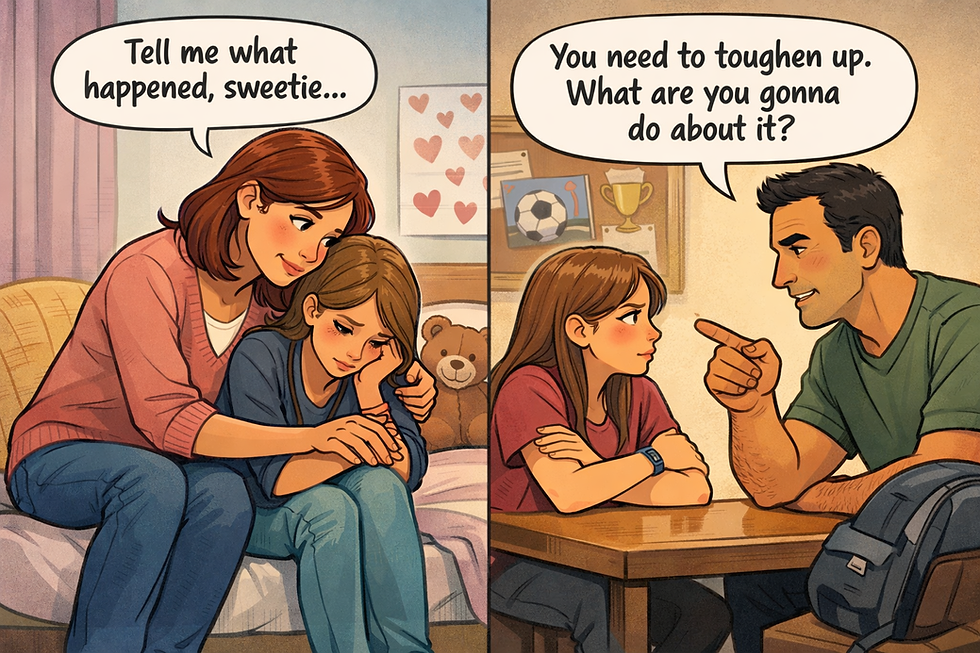
Emotional expression plays a significant role in these differences. Men are more likely to respond to insults by showing irritation, anger, or withdrawal because those are the feelings they’re socially permitted to display. Women, conversely, might express their hurt more openly by crying or reflecting on the reason for the insult.
These gendered patterns don’t apply to everyone, as gender vs. nurture also influences a person’s reaction to an insult. But broadly speaking, men often worry about losing status, while women often worry about losing connection.
Men may be quick to flare up over an insult but their flame is also quickly extinguished. Women, on the other hand, may still be mulling over an insult long after it was made.


Comments