

When “I’m Sorry” Means Different Things
- sandy camillo
- Nov 3, 2025
- 2 min read


“I’m always the one apologizing”-there’s always one partner in a relationship who seems to do all of the apologizing. But even if that’s the case, the method and meaning of an apology depend on the gender of the person making the apology.
Apologizing is one of those deceptively simple acts that reveal a lot about how we see ourselves and others. On the surface, “I’m sorry” should mean the same thing to everyone. But in reality, the way men and women approach apologies often reflects deeper emotional patterns, social conditioning, and expectations about connection and strength. Men and women both say they’re sorry, but they often mean and feel different things when they do.
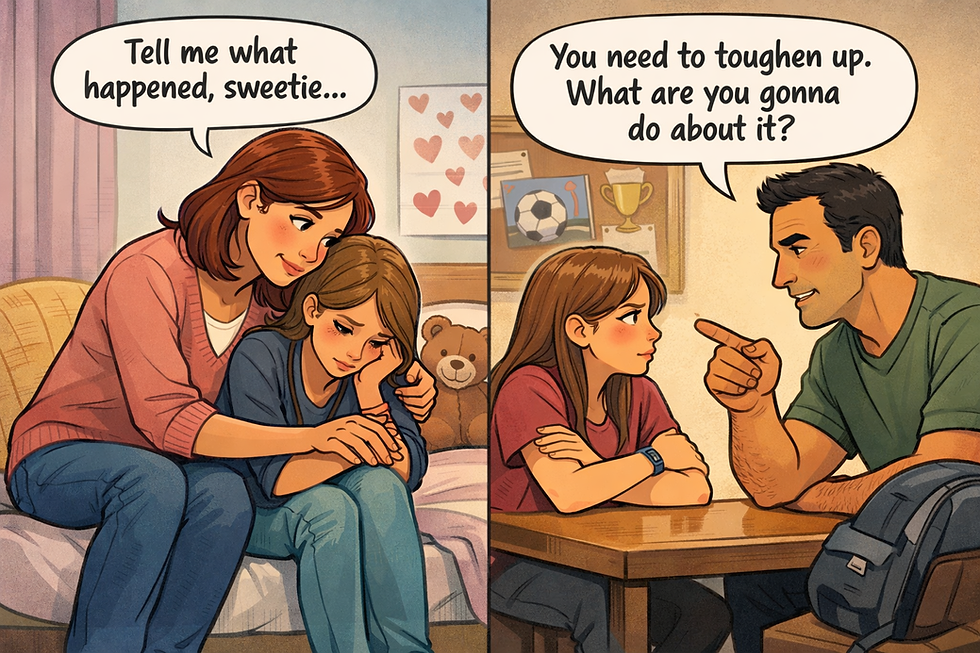
From childhood, girls are generally taught to value harmony and empathy. Saying “I’m sorry” becomes a way to smooth tension, even if they aren’t at fault. However, it doesn’t mean that boys aren’t as empathetic as girls; it simply means that they are taught not to express these feelings. Boys, on the other hand, are often taught to associate apologies with weakness or loss of status and that admitting fault is a kind of defeat.
Research backs this up. In studies conducted by psychologists such as Karina Schumann and Michael Ross at the University of Waterloo, women reported apologizing more frequently than men, because they perceive more behaviors necessitating an apology. Men, in contrast, often view the same situations as too minor to require an apology at all. They’re saving the “I’m Sorry” for the big stuff.
When women apologize, their tone and language are filled with emotion. Their words, “I’m so sorry if that hurt you” or “I didn’t mean to upset you,” show empathy. Men, on the other hand, tend to offer apologies that are more direct and emotionally minimal: “Sorry I was late” or “I shouldn’t have said that.” Their words don’t convey any emotional undertones.
Cultural expectations play a powerful role here. Women are expected to be emotional; men must show control. A woman may interpret a man’s sparse apology as cold, while a man may see a woman’s frequent apologies as unnecessary and over the top.
When men do apologize, they often carry more weight. Because men apologize less frequently, their admissions of wrongdoing can seem more meaningful. For some men, it takes courage to push through the discomfort of admitting fault and the accompanying vulnerability.
Meanwhile, when women over-apologize, though rooted in kindness, it can unintentionally undercut confidence or authority, especially in the workplace.
In the end, apologies aren’t about gender as much as they are about connection. When men and women learn to hear not just the words, but the meaning behind them, forgiveness becomes easier, and relationships grow stronger for it.


Comments